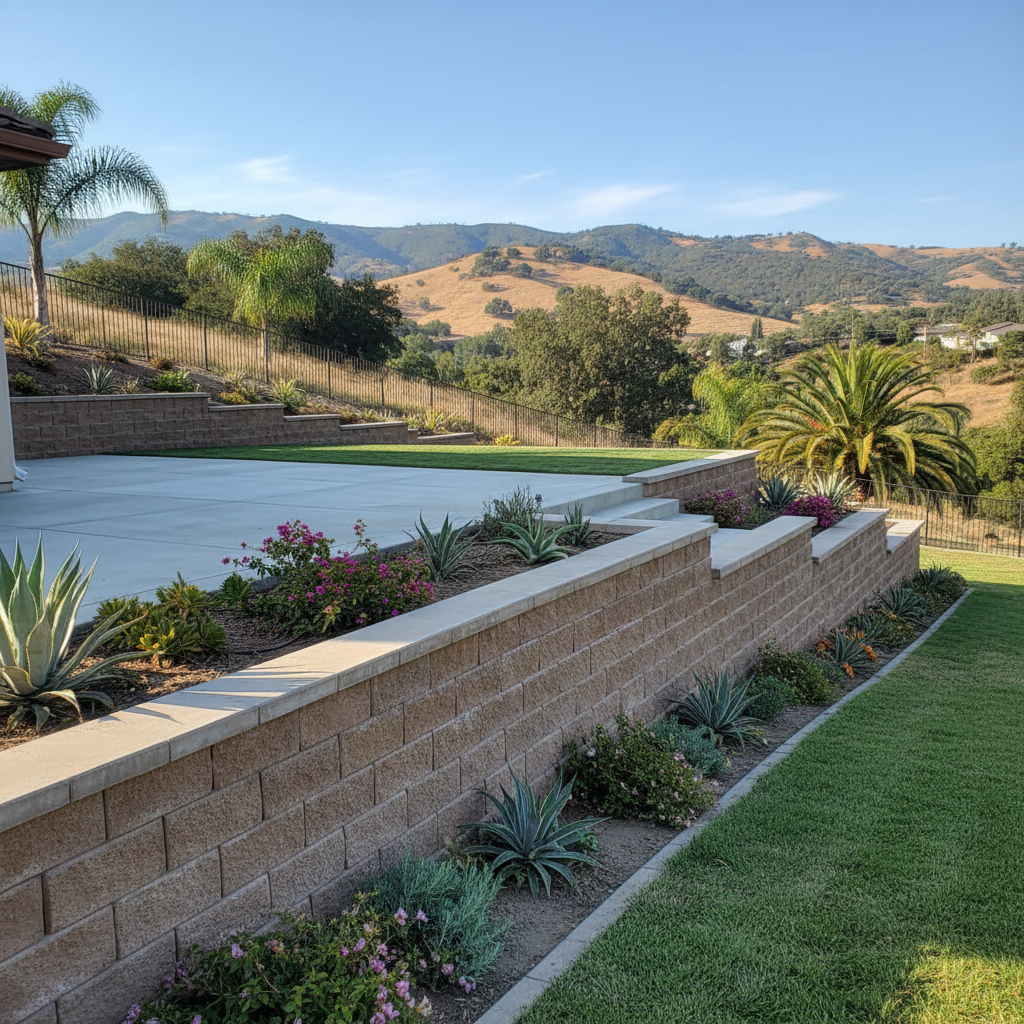
You’re looking at your yard, and maybe it’s on a slope near the Ventura River, or you’re fighting some erosion in the hills. You decide it’s time for a retaining wall. Smart move. A well-built concrete retaining wall can really change things for your property. It adds usable space, stops erosion, and even makes your place look better. But I’ve seen enough projects go wrong to know there are some common mistakes homeowners make. You absolutely need to steer clear of these.
Mistake #1: Skipping the Soil Report (or trusting an old one)
This is probably the biggest one, and honestly, it’s where a lot of problems begin. You might think, “It’s just dirt, right?” Nope, not at all. Especially here in Ventura, we’ve got everything from sandy loam near the beaches to heavier clay up in the foothills. The soil conditions can change wildly, even on the same property. I’ve watched folks try to save a few bucks by not getting a current geotechnical report, or they’ll just use one from 20 years ago. That’s a recipe for disaster, plain and simple.
A good soil report tells us exactly what we’re building on. It points out things like the soil type, how compacted it is, and its drainage characteristics. If your contractor doesn’t insist on this, or just tries to guess, that’s a huge red flag. Without knowing the soil, you can’t design the right foundation for the wall. You could end up with a wall that leans, cracks, or even worse, fails completely because the ground underneath just can’t hold the weight. Sure, it’s an upfront cost, but believe me, it’s tiny compared to fixing a collapsed wall.
Mistake #2: Underestimating Drainage Needs
Water is the enemy of any retaining wall. I cannot stress this enough. If you don’t plan for proper drainage behind and through the wall, you’re basically building a dam. That dam will hold water, hydrostatic pressure will build up, and eventually, it’ll push your wall over. It’s not a question of if, but when.
You absolutely need a good drainage system. This usually means a perforated pipe (often called a French drain) running right along the base of the wall. We cover it with gravel and a filter fabric. The whole point is to let water pass through, not collect. Some homeowners try to cut corners here, thinking a few weep holes will do the job. They won't. Especially after a good Ventura winter storm, that soil behind the wall gets saturated, heavy, and it puts immense pressure on everything. Make sure your contractor has a solid plan for drainage, including how the water will be moved away from the wall’s base.
Mistake #3: Going with the Lowest Bidder Without Asking the Right Questions
Look, I get it. Everyone wants to save money. But when it comes to something as important as a retaining wall, the lowest bid often ends up being the most expensive in the long run. I’ve seen too many homeowners get burned by contractors who underbid because they’re cutting corners on materials, labor, or proper engineering.
Here’s what you really need to ask, beyond just the price:
- Are they licensed and insured? Don’t just take their word for it. Check their CSLB license number. Make sure their insurance is current.
- Do they have specific experience with retaining walls? Pouring a patio is a completely different animal than building a structure that has to hold back tons of earth.
- Can they give you references? And actually call them! Ask about the quality of their work, if they stuck to timelines, and how well they communicated.
- What’s included in the bid? Does it cover permits, engineering, soil reports, excavation, materials, drainage, and clean-up? A super low bid often means some of these crucial items are missing.
- Do they pull permits? For most retaining walls, especially those over a certain height (usually 3-4 feet, but check with the Ventura County building department), you’ll need a permit and engineering plans. If a contractor says you don’t need one, run the other way. They’re either clueless or trying to skirt regulations, which puts you at huge risk.
At Precision Concrete Ventura, we’re upfront about all these costs and processes. Why? Because we want your wall to last. We might not be the cheapest, but we build walls that stand the test of time, and that’s worth every penny, don't you think?
Mistake #4: Ignoring the Engineering and Permit Process
I mentioned this earlier, but it really needs its own point. A retaining wall isn’t just a stack of blocks or a pour of concrete. It’s an engineered structure. For anything significant, you’ll need plans stamped by a structural engineer. These plans dictate everything: the depth of the footing, how much rebar to use, the concrete strength, and the drainage system.
Trying to build without these plans, or without pulling the necessary permits, is a huge gamble. The city or county can issue a stop-work order, fine you, and make you tear down the wall and start over—often at a much higher cost. Plus, if you ever sell your home, an unpermitted structure can cause major headaches during inspections and escrow. Don’t let a contractor talk you into skipping this vital step.
Mistake #5: Not Considering the Long-Term Maintenance (or lack thereof)
While concrete retaining walls are generally pretty low maintenance, they aren’t completely set-it-and-forget-it. You need to make sure the drainage outlets stay clear of debris. Roots from nearby trees can become an issue over decades, potentially messing with the wall. Also, ensure the area around the wall isn’t constantly soaked from irrigation or runoff from other parts of your property.
When you’re planning, think about how you’ll get to the area for any future landscaping or minor repairs. A little foresight here can save you a lot of hassle down the road. A good contractor will talk about these things with you, not just build the wall and disappear.
Building a concrete retaining wall is a big investment, and getting it right the first time saves you a ton of stress and money. Do your homework, ask tough questions, and don’t cut corners on the critical stuff. Your property (and your wallet) will thank you for it.