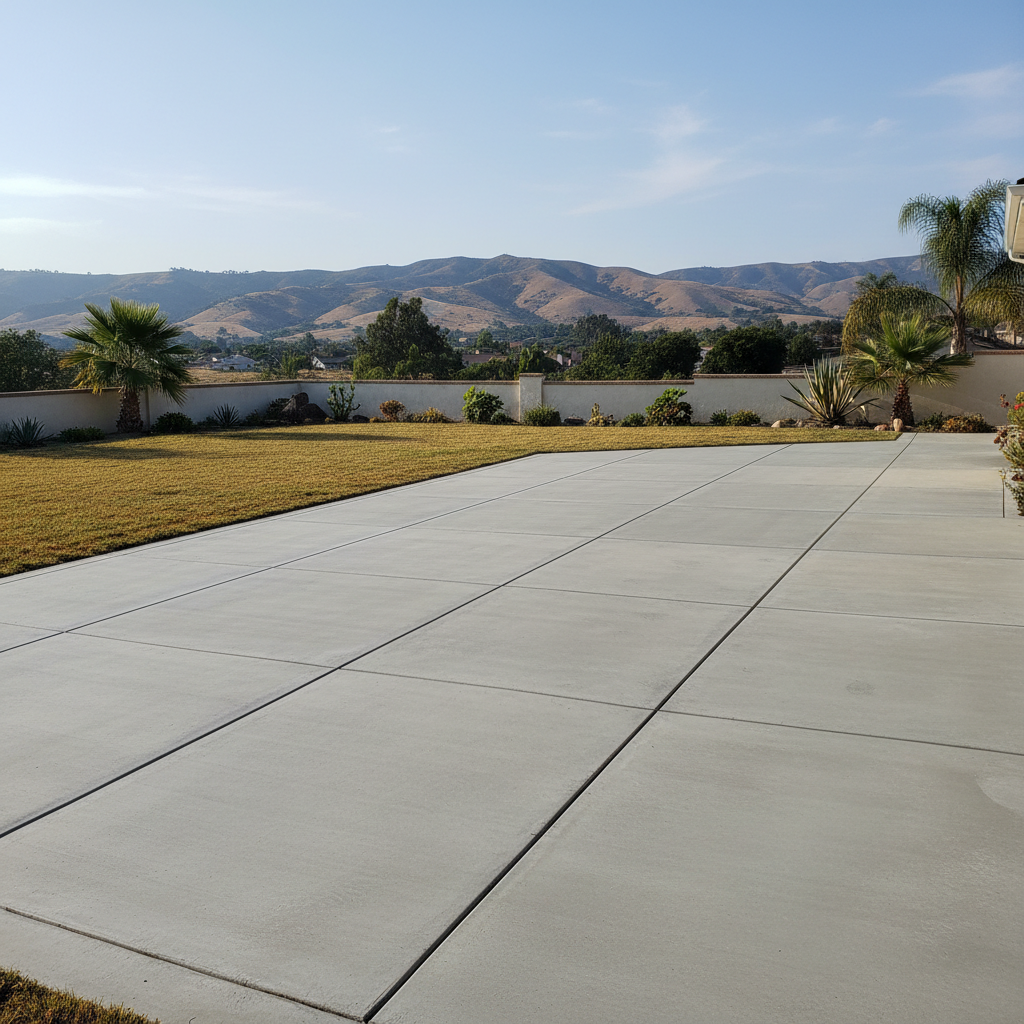
You're ready to upgrade your outdoor space with some new concrete flatwork – maybe a fresh driveway, a nice patio, or a sturdy walkway. That's great! Concrete done right lasts decades and really boosts your home's curb appeal and function. But I've seen my share of projects go sideways, and it's almost always because of a few common mistakes homeowners make right from the start.
Mistake #1: Not Understanding Drainage (It's More Than Just a Slope)
This is probably the biggest one, especially here in Ventura where we get those heavy winter rains. People think, "Oh, just make it slope away from the house." And yeah, that's part of it. But it's way more nuanced than that. You need to consider the entire water flow on your property.
Where is the water going to go *after* it leaves your new concrete? Is it going to pool up against your neighbor's fence? Run into your foundation on the other side of the yard? Or worse, flow right into your garage? I've seen folks pave over existing drainage paths without thinking, creating new problems they didn't have before. A good contractor, like us at Precision Concrete Ventura, will look at your whole property, not just the footprint of the new concrete. We'll talk about swales, catch basins, and how your new slab interacts with your existing landscape and hardscape. Don't just assume a slight slope is enough; ask about the full drainage plan.
Mistake #2: Focusing Only on the Lowest Bid
Look, I get it. Money matters. Everyone wants a good deal. But concrete isn't like buying a toaster; you can't just return it if it doesn't work. When you're comparing bids, if one is significantly lower than the others, that should be a huge red flag, not a green light. There's almost always a reason for a super low price.
- Maybe they're cutting corners on materials – using less rebar, thinner concrete, or a lower-grade mix.
- They might not be properly licensed or insured, which puts you at massive risk if something goes wrong.
- They could be planning to rush the job, skimp on prep work, or use inexperienced labor.
- Often, they'll hit you with "unexpected" extras once the job starts, and your "cheap" project suddenly isn't so cheap anymore.
Ask for detailed bids. What's included? What kind of concrete mix are they using? How much rebar? What's the thickness? A reputable contractor will be transparent about these things. You're investing in something that should last decades; paying a little more upfront for quality and peace of mind is almost always worth it.
Mistake #3: Neglecting Proper Subgrade Preparation
This is the invisible hero of any concrete job. What's underneath your concrete slab is just as important, if not more important, than the concrete itself. Here in Ventura, especially in areas with expansive clay soils like you find around the hills north of Foothill Road, proper subgrade prep is absolutely critical. If the ground isn't properly compacted and stable, your concrete is going to crack, settle, and heave. It's not a matter of if, but when.
A good contractor will excavate to the right depth, remove any organic material, lay down a proper base (like compacted aggregate), and ensure it's all perfectly graded and compacted. They might even recommend a vapor barrier for certain applications. If a contractor just shows up, digs a shallow trench, and starts pouring, you're headed for trouble. Ask them about their subgrade process. If they can't explain it clearly or seem to brush it off, that's a sign to look elsewhere.
Mistake #4: Not Discussing Expansion Joints and Control Joints
Concrete cracks. It's a fact of life. But you can control *where* it cracks. That's what expansion and control joints are for. Expansion joints go all the way through the slab and allow for movement between different concrete sections or between concrete and other structures (like your house foundation). Control joints are saw-cut or grooved into the surface to create weakened planes, encouraging any cracking to happen along those lines, keeping it neat and less noticeable.
I've seen homeowners regret not having enough joints, or having them placed incorrectly. You end up with ugly, random cracks right through the middle of your beautiful new patio. Make sure your contractor has a plan for joint placement, especially on larger slabs. It's a small detail that makes a huge difference in the long-term appearance and integrity of your concrete.
Mistake #5: Rushing the Curing Process
Once the concrete is poured, the job isn't over. The curing process is vital. This isn't just about letting it dry; it's about letting the concrete gain strength properly. Good curing involves keeping the concrete moist for an extended period – usually 7 to 28 days, depending on the mix and conditions. This could mean covering it with plastic, using curing compounds, or even misting it with water.
If you or your contractor rush this, the concrete won't reach its full strength, making it more susceptible to cracking, spalling, and surface damage. Don't let anyone tell you it's fine to drive on your new driveway after just a couple of days. Patience here pays off big time. Ask your contractor about their curing plan and make sure you understand the timeline for heavy use.
Doing your homework and asking the right questions upfront can save you a lot of headaches and money down the road. You want a concrete project that looks great and lasts, and avoiding these common pitfalls is how you get there.