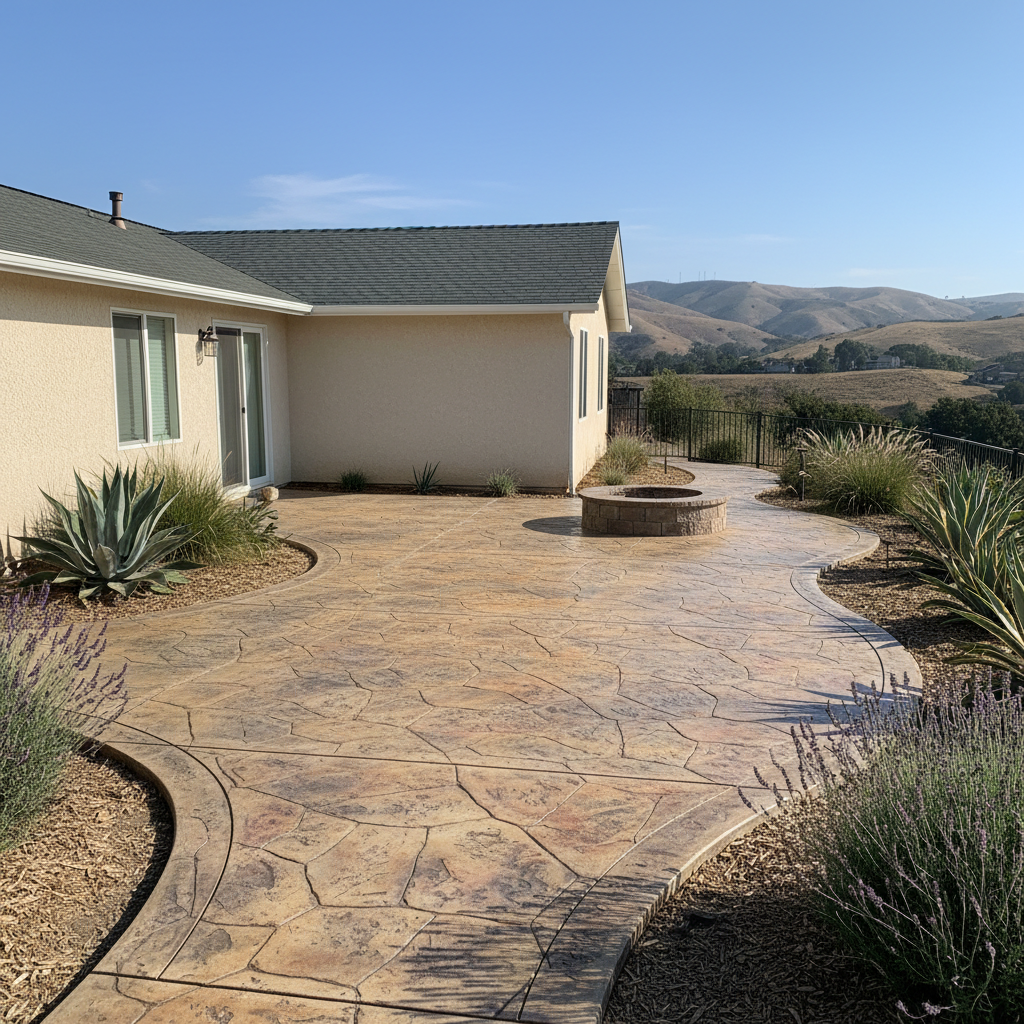
So, you're probably wondering what it costs to get some beautiful stamped concrete laid down at your place. That's a smart question, because nobody likes surprises when it comes to home improvements, right? As a local contractor, I've seen a lot of folks get confused by quotes. So, let's really break down the true cost of stamped concrete here in Ventura.
What Makes Stamped Concrete Prices Go Up or Down?
It's not just one thing, you know? A few big factors really push the numbers around. Think of it like building a custom car – the base model is one price, but then you add all the bells and whistles.
- The Size of the Job: This one's pretty obvious. More square footage means more material, more labor, and more time. A small patio might be 200 sq ft, but a big driveway could easily be 1,000 sq ft or even more.
- The Complexity of the Design: This is huge. A simple running bond brick pattern is way less work than, say, a detailed natural stone look with multiple colors and intricate borders. The more cuts, the more colors, the more texture changes – the more it's going to cost. Some patterns just need more skilled labor and specialized tools.
- Site Preparation: What's already there? If we're just pouring over a perfectly flat, stable dirt area, that's one thing. But if we have to demo an old cracked patio, remove a bunch of tree roots, or bring in a ton of fill dirt to level things out, that adds significant cost. This is especially true in some of the older Ventura neighborhoods where the ground might be uneven or have old foundations lurking.
- Concrete Thickness and Reinforcement: A typical patio might be 4 inches thick. A driveway, especially one that sees heavier vehicles, really should be 5-6 inches. Thicker concrete means more material. Adding rebar or wire mesh for extra strength also adds to the material cost and the labor for placement.
- Color and Sealer Choices: Basic colors usually come included. But if you want multiple custom colors, antique releases, or special stains, those are extra. The type of sealer also matters – some are more durable, offer better UV protection, or give a specific finish (matte, high-gloss), and they all come at different price points.
- Accessibility: Can we get a concrete truck right up to the pour site? Or do we need to use pumps, wheelbarrows, or even a smaller mixer because of tight access? Difficult access adds time and specialized equipment costs.
Typical Stamped Concrete Cost Ranges in Ventura
Alright, let's talk numbers. I've seen prices all over the map, but for a good quality job from a reputable contractor, you're generally looking at:
- Basic Stamped Concrete (simple pattern, one color, good access): Expect to pay anywhere from $12 to $18 per square foot. This would be for something like a simple brick or ashlar slate pattern, a single integral color, and a standard sealer.
- Mid-Range Stamped Concrete (more complex pattern, two colors, some site prep): This usually falls in the $18 to $25 per square foot range. Think a more intricate stone pattern, maybe an accent color with an antiquing release, and a bit more detail work.
- High-End Stamped Concrete (custom design, multiple colors, difficult access, extensive prep): For the really custom, detailed work, you could be looking at $25 to $35+ per square foot. This is for those elaborate flagstone or wood plank designs, multiple custom colors, hand-tooling, and significant site challenges.
Remember, these are just ranges. Your specific project will land somewhere in there based on the factors I just mentioned.
What Should a Good Quote Include?
When you get a quote, it shouldn't just be a number on a napkin. A solid quote from a company like Precision Concrete Ventura will clearly lay out:
- Detailed Scope of Work: What exactly are they doing? Demolition? Grading? Concrete thickness? Pattern choice? Color? Sealer type?
- Materials Breakdown: Concrete quantity (cubic yards), reinforcement (rebar/mesh), stamps, colors, release agents, sealer.
- Labor Costs: Sometimes broken out, sometimes bundled.
- Site Preparation: Any demolition, grading, or base material work itemized.
- Cleanup and Haul-away: Make sure they're not leaving you with a pile of debris.
- Permits: Who is responsible for pulling any necessary permits? (Often the homeowner, but the contractor should guide you.)
- Payment Schedule: Typically a deposit, progress payments, and a final payment upon completion.
- Warranty Information: What's covered and for how long?
How to Avoid Overpaying for Stamped Concrete
Nobody wants to get ripped off. Here's how to be smart about it:
- Get Multiple Quotes: Don't just go with the first guy. Get at least three detailed quotes from different reputable contractors. This helps you compare apples to apples.
- Check References and Reviews: Look at their past work. Talk to previous clients. A good contractor will have plenty of happy customers, believe me.
- Be Specific About Your Vision: The more details you can give upfront about what you want, the more accurate the quote will be. Show them pictures!
- Don't Always Go for the Cheapest: The lowest bid often means corners are being cut – thinner concrete, less prep, cheaper materials, or inexperienced labor. You don't want your beautiful new patio cracking in a year because someone skimped on the base.
- Understand the Contract: Read every line. If you don't understand something, ask. Don't sign until you're clear on everything.
Choosing stamped concrete is a great way to add value and beauty to your home. Just do your homework, ask the right questions, and you'll end up with a fantastic result without breaking the bank.