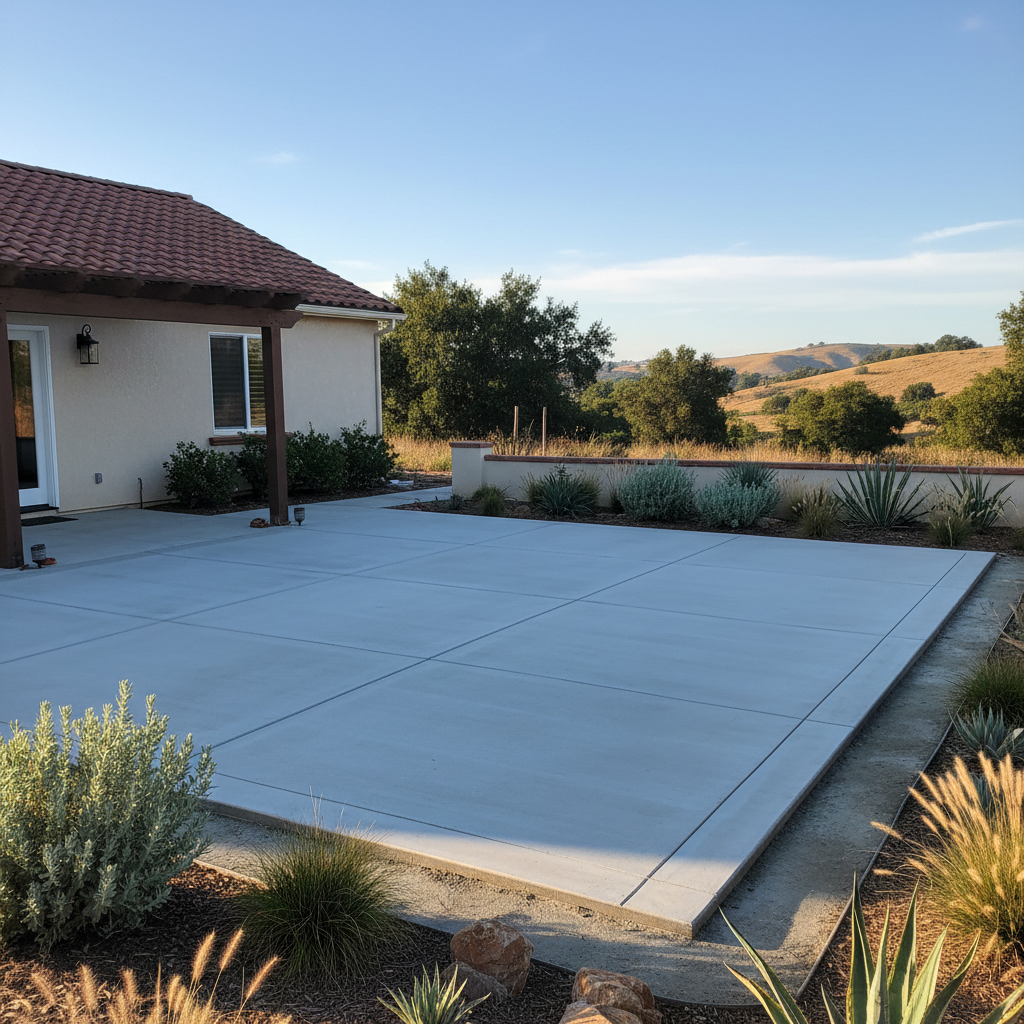
Ever walk across a brand-new backyard slab only to spot hairline fractures a few months later? Precision Concrete Ventura sees this problem all the time. Homeowners invest hard-earned cash into expanding their outdoor living space, but simple planning and hiring oversights end up ruining the finished product. If you are getting ready to upgrade your backyard, you want a surface that lasts for 15 to 20 years or more rather than one that starts crumbling after the first real seasonal shift.
Skipping Proper Sub-Base Compaction
The biggest mistake happens right at the start before a single drop of concrete gets mixed. Ventura properties deal with a mix of sandy loams and shifting clay soils that expand with winter moisture and shrink during those long dry summers. If a contractor rushes through the grading and does not properly compact the sub-base, your gorgeous new patio is practically guaranteed to crack or sink. You cannot shortcut the ground prep. Precision Concrete Ventura always tells property owners that the real strength of a patio comes from what is buried underneath it, long before you ever see the finished surface.
Ignoring Slopes and Drainage Direction
Water has to go somewhere when it rains, and fighting gravity never works out. Too many patios are poured dead-level or pitched slightly toward the house. That means instead of shedding runoff cleanly into the yard or a designated drain, you end up with stubborn puddles right against your foundation wall. A proper patio needs a gradual slope away from your home structure, usually an eighth to a quarter inch per foot. Taking time to map out drainage prevents basement leaks and keeps your outdoor furniture from sitting in a swamp.
Falling for the Lowest Bidder Trap
Quotes can vary wildly across Ventura County, and it is tempting to go with the contractor who offers the cheapest price tag. But you have to ask why they are so cheap. Usually, it means they are skimping on concrete thickness, using substandard reinforcement mesh, or cutting corners on the cure time. A standard patio should generally be at least four inches thick, and if you plan to put heavy items like a hot tub or a large masonry outdoor kitchen on it, you need a thicker pour with rebar reinforcement rather than basic wire mesh. Fixing a failing patio costs significantly more than paying to do it right the first time.
Neglecting the Local Climate Factor
Living right here on the coast means dealing with morning marine layers, high humidity, and salty air. If your contractor uses the wrong mix design or forgets to apply a quality sealer, moisture gets trapped inside the pores. This leads to surface spalling, efflorescence, and a dull look way too early in the game. Make sure your project accounts for local weather realities so your patio stays solid, clean, and ready for weekend barbecues year after year.