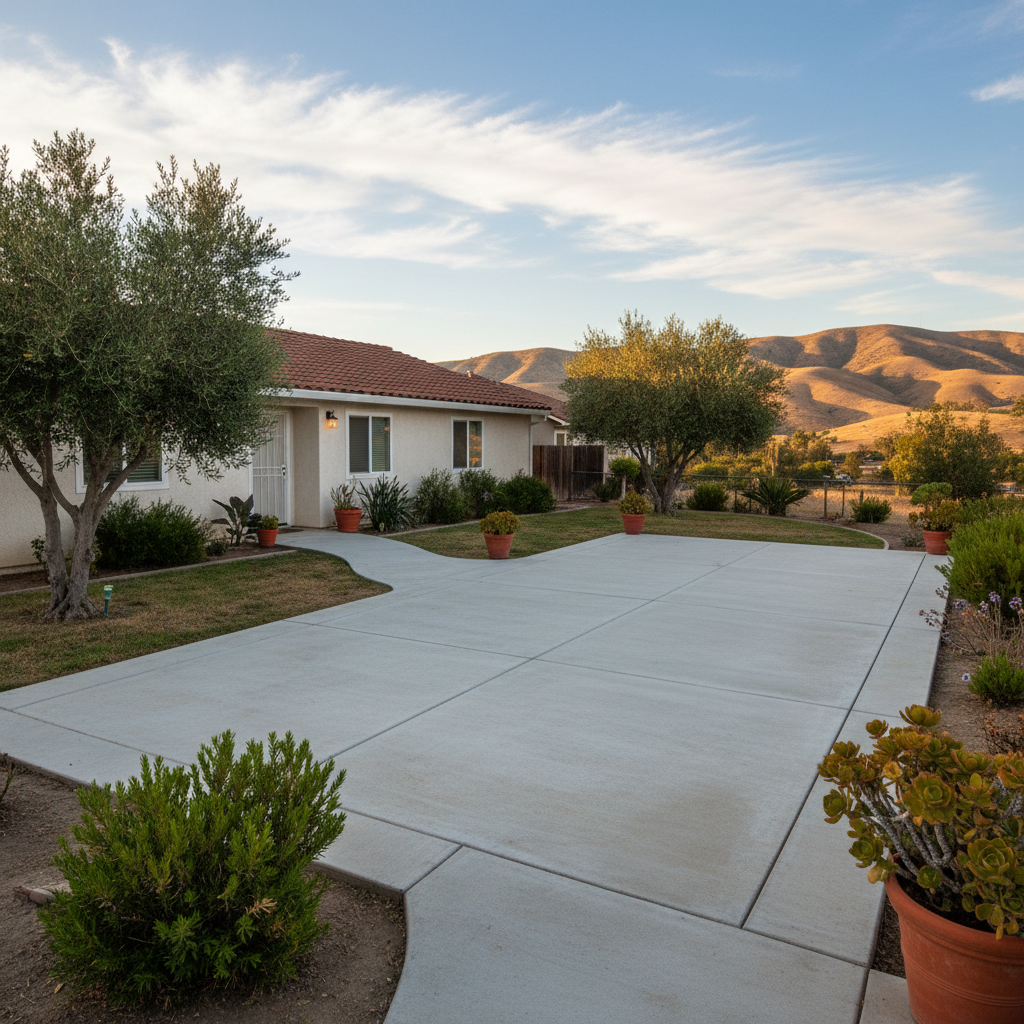
Alright, let's talk about concrete. You're thinking about a new patio, a driveway, maybe some walkways around your Ventura home. First thing on your mind, naturally, is what's this going to cost me? It's a fair question, and frankly, a lot of folks get vague answers. I'm not about that. I'm going to give you the straight goods on concrete pricing here in Ventura, what influences it, and how you can make sure you're getting a solid deal.
What Drives Concrete Installation Costs?
You probably already guess it's not a one-size-fits-all price. Several big factors really push the numbers up or down. Think of it like this:
- Size and Scope: This is the most obvious one. A small backyard pad is going to be way less than a full-sized driveway. We measure in square feet, and the larger the area, the more material and labor needed.
- Type of Concrete & Finish: Standard gray broom-finish concrete is your most economical option. Want stamped concrete that looks like flagstone? Or exposed aggregate for a unique texture? How about colored concrete? These decorative finishes take more skill, more time, and often specialized materials, so they'll cost more.
- Site Preparation: This is a huge one people often overlook. Is the area already clear, level, and ready for us to come in and pour? Or do we need to demolish old concrete, remove dirt, deal with tree roots, or bring in a lot of fill to get the right grade? Demolition and extensive grading add significant costs. For instance, if we're digging out for a new driveway and hit a lot of the dense clay soil we often find in areas like the hills above Foothill Road, that's more work for the excavators.
- Accessibility: Can our trucks get right up to the pour site? Or do we need to use wheelbarrows or a pump truck to get the concrete where it needs to go? Pumping concrete, especially over long distances or up slopes, adds a few hundred to over a thousand dollars to the job.
- Reinforcement: Most residential concrete needs some kind of reinforcement. Wire mesh is standard and pretty affordable. Rebar (steel reinforcing bars) provides much greater strength, especially for driveways or foundations, and it costs more in both material and labor to install.
- Permits: Depending on the size and type of project, you might need a city permit. This isn't always a huge cost, maybe a few hundred dollars, but it's something to factor in.
Typical Concrete Pricing in Ventura, CA
Okay, let's get to some actual numbers. Remember, these are general ranges for our area. Every job is unique, but this should give you a good ballpark.
- Standard Broom Finish (4-inch thick, basic prep): You're generally looking at $8 to $15 per square foot. This is for your basic patio, walkway, or shed slab. A 10x10 (100 sq ft) pad might be $800-$1500. A 20x20 (400 sq ft) patio could be $3,200-$6,000.
- Driveways (4-6 inch thick, reinforced, basic prep): Driveways need to handle vehicle weight, so they're thicker and usually include rebar. Expect $10 to $20 per square foot for a standard broom finish. A typical two-car driveway (around 400-600 sq ft) could run you $4,000-$12,000.
- Decorative Concrete (Stamped, Colored, Exposed Aggregate): This is where prices jump. You're looking at $15 to $35+ per square foot, depending on the complexity of the pattern, number of colors, and type of aggregate. A stamped concrete patio could easily be $6,000-$14,000 for a 400 sq ft area.
- Demolition and Hauling: If we're tearing out old concrete, budget an additional $2 to $6 per square foot for removal and disposal.
- Site Grading/Excavation: This varies wildly. Minor grading might be a few hundred dollars. Major excavation, especially if machinery is needed for a full day or more, can run into thousands.
These numbers assume a reasonably accessible site and standard conditions. If we're talking about a super tricky access job or a very small project where fixed costs (like mobilization) become a larger percentage, the per-square-foot price might be a bit higher.
What Should a Concrete Quote Include?
When you get a quote from Precision Concrete Ventura, or any reputable contractor, it should be clear and detailed. Here's what you want to see:
- Detailed Scope of Work: Exactly what's being done. Dimensions, thickness, type of finish, any special features.
- Materials Breakdown: Type of concrete mix, reinforcement (mesh/rebar), any color or stamping materials.
- Site Prep: What's included? Demolition, grading, base material (gravel).
- Labor Costs: This is usually rolled into the per-square-foot price, but it's good to know it's covered.
- Permits: Who is responsible for pulling them? What's the estimated cost?
- Cleanup and Hauling: Confirmation that all debris will be removed.
- Total Cost: The final price, clearly stated.
- Payment Schedule: Typically, a deposit upfront, progress payments, and a final payment upon completion.
- Warranty Information: What's covered and for how long?
How to Avoid Overpaying for Concrete
Getting a fair price isn't just about finding the cheapest guy. It's about getting good value for your money. Here's my advice:
- Get Multiple Bids: Always get at least three detailed quotes. This helps you compare apples to apples. If one bid is drastically lower, be wary. They might be cutting corners.
- Check References & Reviews: Don't just take their word for it. Look at their past work, talk to previous clients. A good contractor will have a solid reputation.
- Verify Licensing & Insurance: This is non-negotiable. Make sure they're licensed by the CSLB (Contractors State License Board) and carry liability insurance. You don't want to be on the hook if someone gets hurt or something goes wrong.
- Don't Rush the Decision: Take your time to review quotes and ask questions. A good contractor won't pressure you.
- Be Clear About Your Expectations: The more specific you are about what you want, the less room there is for misunderstandings and costly change orders down the line.
- Ask About the Base: A strong, well-compacted base is crucial for concrete longevity, especially with our occasional heavy rains. Make sure your contractor isn't skimping here.
Investing in concrete is a big deal for your home. You want it done right, and you want to feel good about the price you paid. Do your homework, ask the right questions, and you'll end up with a beautiful, durable surface that lasts for decades.